Luang Prabang
An in-depth Luang Prabang guide covering temples, Kuang Si Falls, food, the best areas to stay, transport and a practical four-day itinerary.
- Best for
- Heritage, temples, food and slow travel
- Ideal stay
- 4–5 days
- Last reviewed
- 2026-07-23
Why visit Luang Prabang?
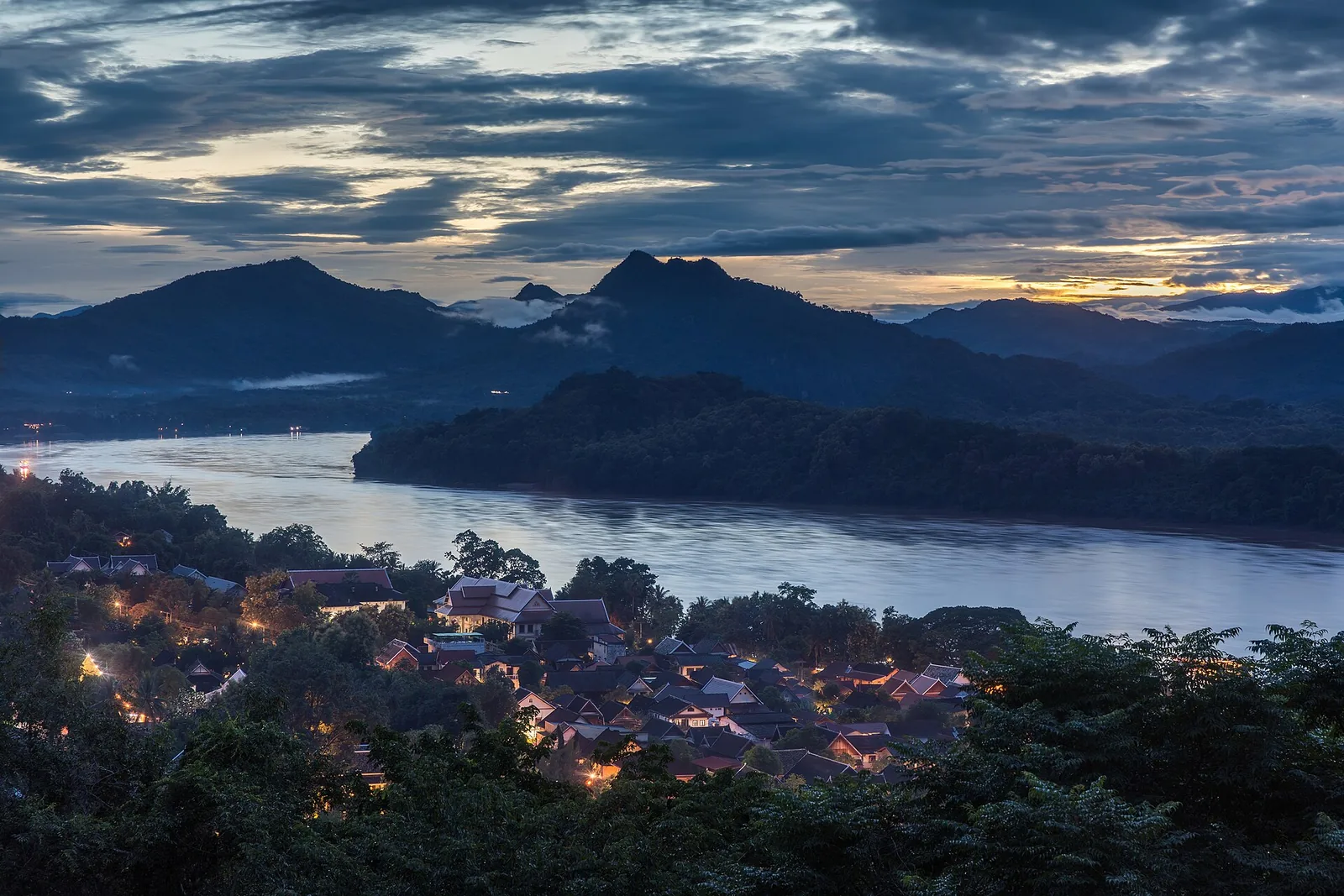
Luang Prabang is the cultural centrepiece of most first journeys through Laos. The historic peninsula sits between the Mekong and Nam Khan rivers, with temple roofs, old houses, palms and low mountains shaping almost every view.
Its UNESCO status and popularity bring crowds, but the town still rewards early mornings, side streets and several unhurried days. The goal is not to collect every temple. It is to understand the rhythm connecting religious life, river geography, food and architecture.
How many days do you need?
Four days gives you time for the old town, Kuang Si Falls, markets and a river or countryside excursion. Five days is better if you want quiet mornings and fewer scheduled transfers.
A two-night visit covers the highlights but misses much of the atmosphere that makes Luang Prabang special.
Best things to do in Luang Prabang
Visit Wat Xieng Thong
Wat Xieng Thong is one of the city’s most important monasteries and a high point of Lao religious architecture. Go early, dress respectfully and spend time looking at the roof lines, mosaics and smaller structures around the main hall.
Walk the historic peninsula
The old town is compact enough to explore on foot or by bicycle. Alternate major streets with the quieter lanes leading to the Mekong and Nam Khan.
Climb Mount Phousi
The hill offers a central view across the town and surrounding rivers. Sunset is popular and crowded. A morning climb is cooler and often more peaceful.
Swim at Kuang Si Falls
Kuang Si combines a large waterfall with a series of turquoise pools. Leave early, confirm current swimming areas and allow at least half a day including transport.
Visit the morning market
The morning market is more revealing than the evening souvenir market. You will see herbs, river produce, fruit, prepared food and ingredients used in northern Lao cooking.
Spend time on the rivers
A short Mekong crossing, sunset boat or longer trip towards Pak Ou changes your perspective on the town. Choose a responsible operator and understand how much time will be spent on the water versus at stops.
A four-day Luang Prabang itinerary
Day one
Walk the peninsula, visit Wat Xieng Thong and watch the late light from the Mekong side.
Day two
Go early to Kuang Si Falls. Return for a relaxed dinner rather than adding another major excursion.
Day three
Visit the morning market, climb Mount Phousi outside peak time and explore smaller temples and residential lanes.
Day four
Choose a river trip, countryside cycling, a cooking class or a quiet day split between cafés and museums.
Morning alms: how to observe respectfully
Tak Bat is a living religious practice. Watch quietly from a respectful distance, do not use flash and never block monks or residents for a photograph.
Only participate if a trusted local host has explained the practice and provided appropriate food. Buying low-quality offerings from aggressive vendors can turn a religious ritual into a performance.
Where to stay
The historic peninsula is best for first-time atmosphere and walking. Rooms near the main night-market street are convenient but can be noisier.
Across or beyond the old centre, properties often offer more space and calmer mornings. Check bridge access, bicycle availability and transport before choosing a hotel that appears close on the map.
Read our detailed guide to where to stay in Laos.
What to eat
Look for or lam, Luang Prabang sausage, Mekong riverweed with chilli dip, grilled fish and market snacks made with herbs and sticky rice.
The town has polished restaurants, simple family kitchens and excellent cafés. Mix them rather than eating only inside the heritage centre. Our guide to food in Laos explains the structure of a Lao meal.
Getting around
Walking and bicycles cover the old town. Tuk-tuks and shared vans reach Kuang Si and other excursions.
The railway station is outside the city, and the airport is closer. Confirm transfers rather than estimating from the map. For the slow boat and onward routes, read how to get around Laos.
When to visit
The cooler dry season is comfortable for walking and cycling, but it is also the busiest period. Hot-season afternoons require a slower pace. During the wet season, the landscape is greener and waterfalls stronger, with heavier showers and changing river conditions.
Air quality can be affected during the regional burning period. Check current conditions if you have respiratory concerns.
Good to know
- Cover shoulders and knees in temples.
- Ask before photographing people.
- Carry cash for markets and local transport.
- Avoid scheduling every morning before sunrise.
- Choose qualified guides for rural activities.
- Keep mobile data as a backup to guesthouse Wi-Fi.
Continue south through Vang Vieng and Vientiane, or use Luang Prabang as a base for a longer northern journey.