What is Lao food like?
Lao food is built around contrast: fragrant herbs, smoke from the grill, sharp lime, fermented depth, chilli heat and the clean comfort of sticky rice. Meals often arrive as several dishes to share rather than separate plates for each person.
The cuisine changes by region and community. Northern dishes can be more herbaceous and less sweet, the Mekong brings freshwater fish into everyday cooking, and southern food reflects the produce and flavours of the Bolaven Plateau and neighbouring regions.
Essential Lao dishes to try
Khao niao — sticky rice
Sticky rice is the everyday staple and the centre of the table. It is served in a small woven basket. Take a modest piece with your fingers, shape it gently and use it to pick up food or dip into a jaew.
Larb
Larb is a finely chopped meat or fish salad mixed with herbs, lime, chilli and toasted rice powder. Recipes vary widely. If you prefer cooked meat, say so clearly when ordering because some versions may be served raw or lightly cooked.
Tam mak hoong
The Lao version of green papaya salad is punchy, savoury and often very spicy. Fermented fish sauce gives traditional versions a deeper flavour than many visitors expect. Ask for fewer chillies rather than assuming “not spicy” will be interpreted the same way everywhere.
Ping gai
Grilled chicken is marinated with aromatics and cooked over charcoal. It is especially associated with the Savannakhet region but appears throughout the country. Eat it with sticky rice and a chilli dip.
Khao piak sen
This comforting rice-noodle soup has a thick, silky broth and is a good breakfast or rainy-day meal. Add herbs, lime and chilli to taste.
Or lam
A Luang Prabang speciality, or lam is a slow-cooked stew with vegetables, herbs and a gentle numbing or peppery quality from local ingredients. It is a useful dish for understanding northern Lao flavours beyond the most familiar classics.
Mok pa
Fish is mixed with herbs and aromatics, wrapped in banana leaf and steamed. The result is fragrant and delicate, with none of the heaviness of fried food.
How Lao meals are eaten
Shared dishes sit in the middle of the table. Take small amounts and return for more. Sticky rice is normally eaten with the right hand, while soups and noodle dishes use chopsticks and a spoon.
Wait for your hosts to indicate where to sit and when to begin in a family setting. If a communal glass of beer is being passed around, you can politely decline without making a performance of it.
Markets and street food
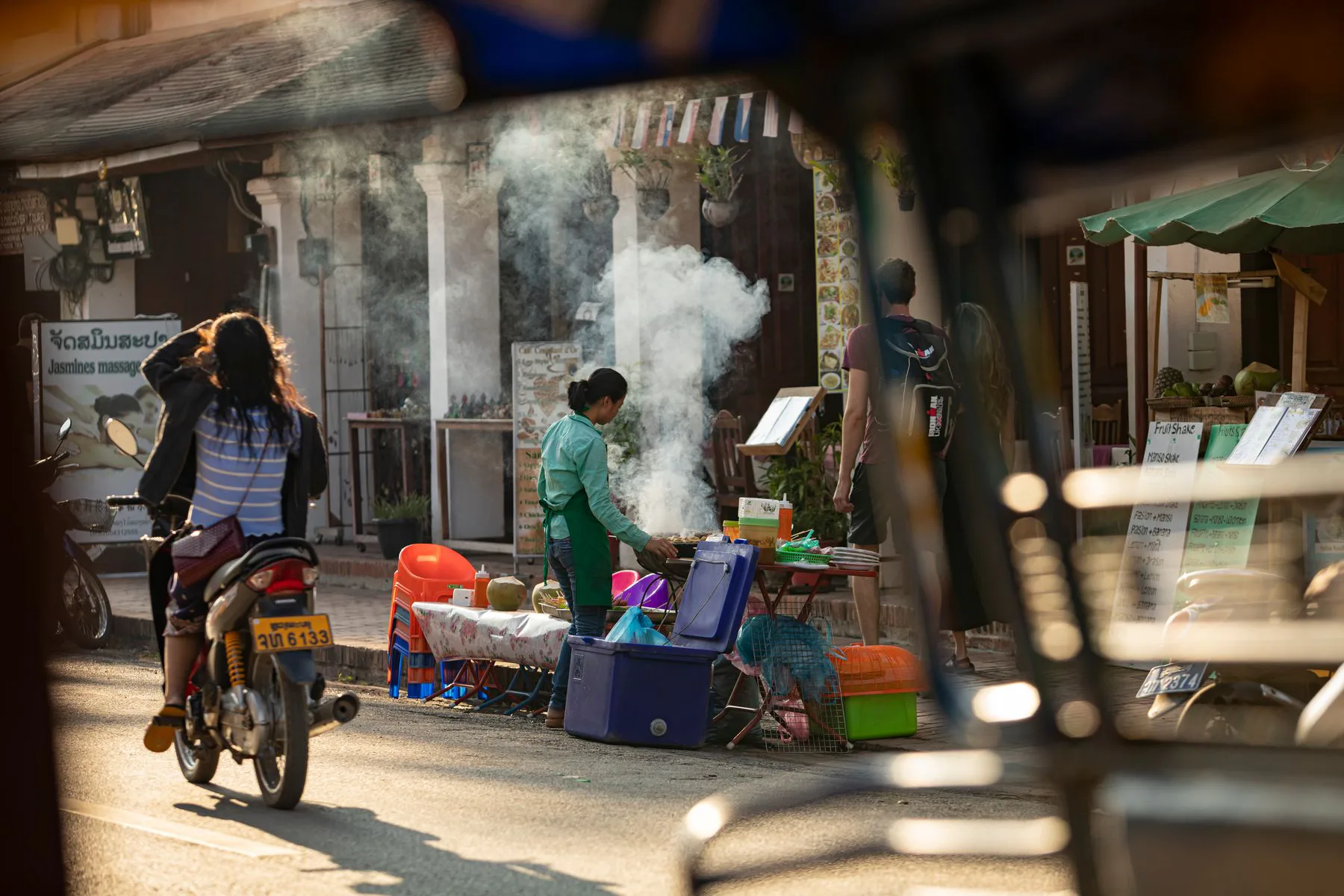
Morning markets reveal the ingredients behind Lao cooking: river fish, mushrooms, bamboo shoots, herbs, fruit, chilli pastes and prepared snacks. Night markets are easier for first-time visitors, but they can lean towards familiar traveller food in the busiest areas.
Choose stalls with steady turnover and food that is cooked in front of you. Freshly grilled items and steaming soups are usually a better bet than dishes that have been sitting uncovered.
Vegetarian and vegan travel
Vegetarian food is available in the main tourist destinations, but fish sauce, fermented fish paste and meat stock can appear in dishes that look plant-based.
Useful ideas to communicate are:
- no meat;
- no fish;
- no fish sauce;
- no oyster sauce;
- vegetables and tofu are fine.
Translation apps help, but a saved note written in Lao is better when your dietary restriction is important. Buddhist vegetarian restaurants and cafés in larger towns are often the easiest option.
Food safety without missing the experience
You do not need to avoid markets or local restaurants. Use ordinary judgement:
- choose busy stalls;
- eat food that is cooked thoroughly and served hot;
- drink sealed or properly filtered water;
- wash or peel fruit;
- be cautious with raw meat and unfamiliar fermented dishes;
- carry oral rehydration salts.
The official Laos tourism site also advises visitors to choose well-cooked food and safe drinking water in its before-you-go guidance.
Where to eat by destination
In Luang Prabang, look for northern specialities, Mekong riverweed, or lam and relaxed courtyard restaurants. Vientiane has the country’s broadest range, from market breakfasts to contemporary Lao cooking and international cafés.
Vang Vieng mixes simple Lao restaurants with traveller-oriented menus, while Pakse is a good base for southern flavours, Vietnamese influence and Bolaven coffee.
What to order on your first day
Start with sticky rice, grilled chicken or fish, one herb-heavy dish such as larb, a mild soup and a jaew. That combination gives you the structure of a Lao meal without ordering more than you can finish.