The short version
Travelling between cities in Laos and getting around within each destination are two different decisions. The railway, buses, minivans, flights and long-distance boats connect the country. Tuk-tuks, taxis, songthaews, bicycles and scooters are for station transfers, short journeys and local exploration after you arrive.
The most useful rule is simple: measure journeys in time, not distance. A place that looks close on the map may involve mountain roads, several stops or a change of vehicle.
Travel between cities in Laos
Choose your intercity transport first. The best option depends on your route: the railway dominates the main northern corridor, while buses and minivans cover most destinations outside it. Flights can save time between distant regions, and boats are useful on a small number of specific routes.
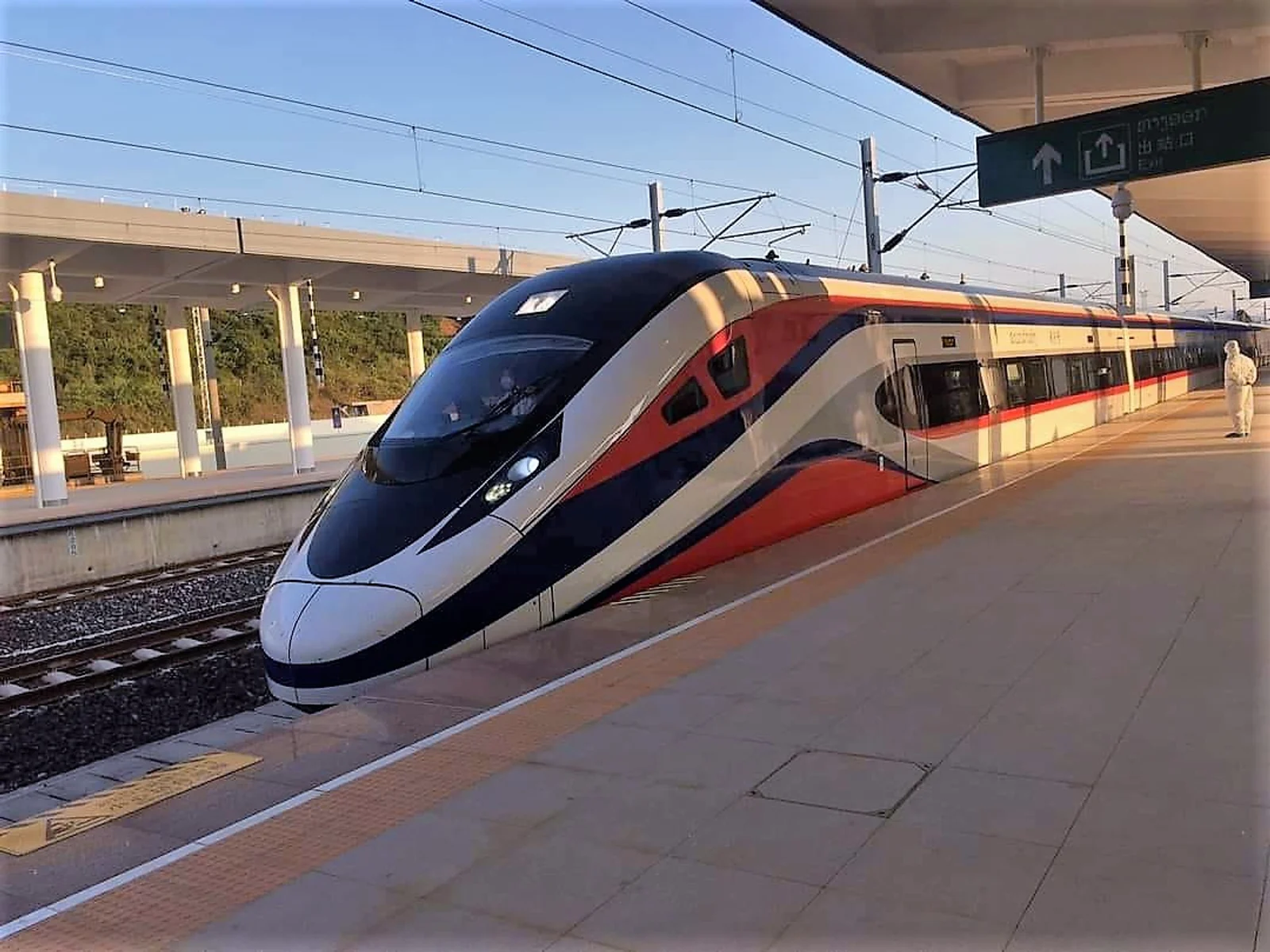
The Laos–China Railway
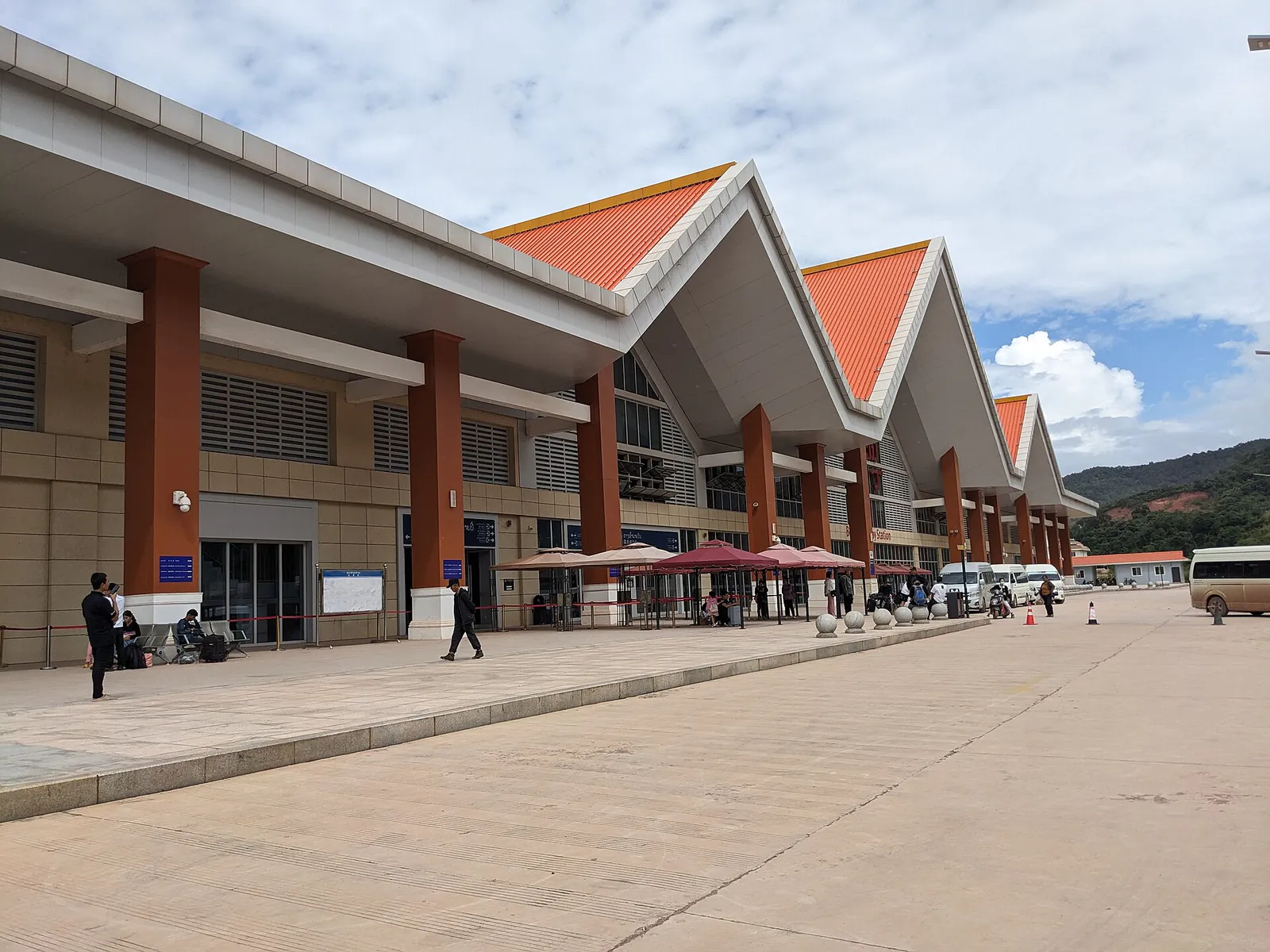
The railway is the most efficient way to travel along the country’s main northern corridor. The stations serving Vientiane, Vang Vieng and Luang Prabang are outside their town centres, so every rail journey also needs a transfer at each end.
Arrive early. Stations use security screening, and boarding is more structured than at a bus terminal. Keep your passport available and make sure the name on your ticket matches your identification.
The train works especially well for:
- Vientiane to Vang Vieng
- Vang Vieng to Luang Prabang
- Vientiane to Luang Prabang
- northbound connections towards Oudomxay, Luang Namtha Province and the Chinese border
Schedules and booking methods can change. Confirm the current departure time shortly before travel instead of building a tight same-day connection around an old timetable.
Book your train before you arrive whenever possible. Seats are limited, and popular departures or preferred seat classes can fill quickly—especially around weekends, Lao and Chinese public holidays, and peak travel periods. Once your route and travel date are fixed, reserve early instead of waiting until you reach the station.
Buses and minivans
Buses and minivans reach far more of Laos than the railway. They are the normal choice for Pakse, Thakhek, Savannakhet, the Bolaven Plateau, the 4,000 Islands and many smaller towns.
Minivans are usually faster but can feel cramped, especially with luggage. Larger buses are slower and may make frequent stops, but they offer more space on longer routes. Overnight buses save a hotel night, although winding roads and frequent movement mean they are not restful for everyone.
Ask your guesthouse which station your vehicle uses. Larger cities often have several terminals, and the words “north bus station” or “south bus station” can describe a location well outside the centre.
For everything the railway skips — Pakse, Thakhek, the 4,000 Islands, the Bolaven Plateau — you can compare real departures and reserve a seat in English on 12Go instead of guessing at the terminal. E-tickets, buses, minivans and boats in one place.
Domestic flights
Flying can make sense when your itinerary connects distant regions, particularly between Vientiane, Luang Prabang and Pakse. It is less useful for a short northern trip where the railway is already efficient.
Domestic schedules are not always daily, and seasonal changes are possible. Check directly with Lao Airlines before committing to onward accommodation or an international connection.
Boats between destinations
River travel is slower but can be one of the most memorable ways to enter or experience Laos. The best-known journey is the slow boat on the Mekong between Huay Xai and Luang Prabang, normally broken by an overnight stop in Pakbeng.
In southern Laos, smaller boats connect the islands of Si Phan Don. Around Luang Prabang and other riverside destinations, local trips also reach caves, villages and sunset viewpoints.
Boat conditions vary. Carry sun protection, drinking water, a light layer for wind and a dry bag during the wet season.
Getting around within cities and destinations
Once you reach a city, plan the last part of the journey separately. Railway stations, bus terminals and airports are often outside the centre, so the transport that brings you across Laos will rarely take you directly to your accommodation.
Station and airport transfers
Arrange the arrival transfer before a very early or late journey. Hotels and guesthouses can usually organise a driver, while larger stations may have tuk-tuks, shared vans or fixed-price taxi counters.
Confirm the destination and total price before leaving. If you are sharing a vehicle, ask whether the quoted fare is per person or for the whole group.
Tuk-tuks, “kok kok”, green taxis and songthaews
This is where Laos gets its own vocabulary — learn it and you will haggle less and pay locals’ prices sooner.
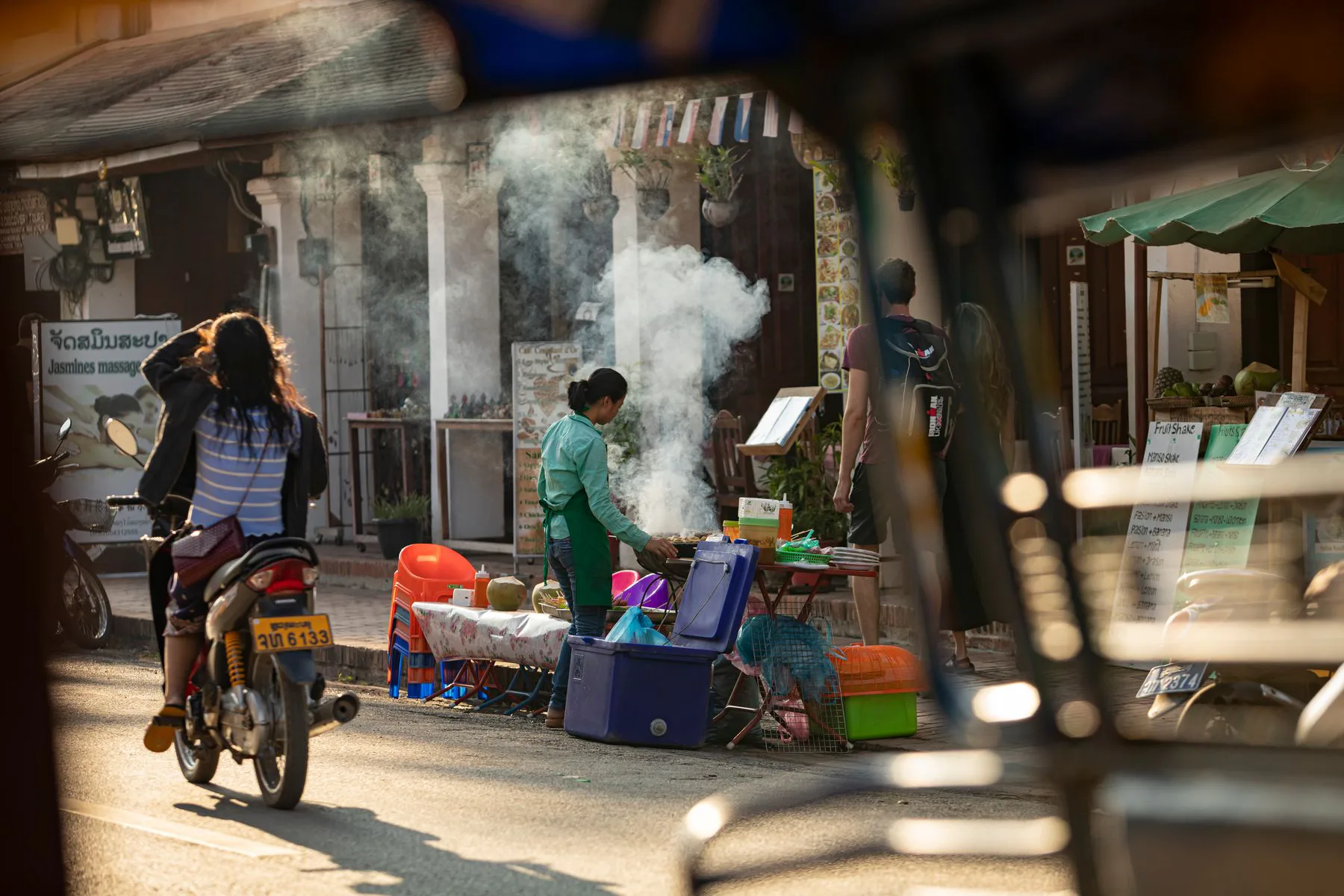
- Tuk-tuk / “kok kok” — the three-wheeler you will use most in town. Larger versions built on a small truck are called a jumbo. There are no meters, so agree the price before you climb in and confirm whether it is per person or for the whole vehicle. A short hop across a town centre is usually a few tens of thousands of kip; drivers quote higher to new arrivals, so a friendly counter-offer is normal and expected.
- Green taxis (LoCa) — Vientiane’s answer to Grab. LoCa is the Lao ride-hailing app: you see the fare up front, pay by app or cash, and skip the negotiation entirely. Its metered cars are often painted green, which is why travellers call them the “green taxis”. Coverage is strongest in and around Vientiane (including the airport) and growing in Luang Prabang; do not count on it in smaller towns.
- Songthaew — literally “two rows”, a converted pickup with benches down each side. It works like a shared bus-taxi: it follows a loose route or leaves once it is full, and you press a buzzer or tap the roof to get off. The cheapest way to move around, and the most local.
- Your guesthouse — still the most reliable dispatcher for an early-morning station run or a fixed-price car. Ask the night before; the station and airport sit well outside the centre.
- Kok kok / tuk-tukShort town hops · negotiate · cash
- JumboBigger group or luggage · negotiate · cash
- LoCa green taxiVientiane & airport · fixed app fare · no haggling
- SongthaewCheapest · shared route · pay on exit
A word on payment: carry small kip notes. Many drivers cannot change a 100,000 kip note for a 20,000 kip ride, and “no change” is a slow negotiation you can avoid by keeping a pocket of small bills.
Renting a scooter for local trips
A scooter gives freedom on the Bolaven Plateau, around Thakhek and in the countryside outside Vang Vieng, but it is not the right choice for every traveller.
Only ride if your licence and insurance cover the vehicle. Wear a proper helmet, photograph existing damage, test the brakes and lights, and avoid riding unfamiliar roads after dark. Wet-season surfaces, livestock, potholes and dust can all change road conditions quickly.
For major one-way journeys, public transport is usually simpler. Scooters are best treated as a tool for local exploration rather than a way to cross the entire country.
Walking and bicycles
Central Luang Prabang is easy to explore on foot, while bicycles can work well for short, flat trips in quieter destinations. Vientiane is more spread out, and the heat can make even a short walk uncomfortable in the middle of the day.
Use offline maps, carry water and avoid assuming that every road has a continuous pavement or safe lighting after dark.
A sensible first-time route
For a first visit, the easiest sequence is:
- Vientiane for two nights
- Vang Vieng for two or three nights
- Luang Prabang for three or four nights
That route follows the railway and avoids losing full days to road transport. Read the individual guides to Vientiane, Vang Vieng and Luang Prabang before deciding how to divide your time.
If you have two weeks or more, add a separate southern section around Pakse, the Bolaven Plateau and Si Phan Don rather than trying to squeeze the whole country into a continuous rush.
Transport planning checklist
- Keep one buffer day before an international flight.
- Download offline maps before a long road journey.
- Carry some cash for local transport and station transfers.
- Ask where the vehicle actually departs, not only what time.
- Avoid booking every connection back-to-back.
- Expect travel during the wet season to take longer.
For connectivity on the road, continue with our guide to SIM cards and internet in Laos.