Plain of Jars & Phonsavan
Plan a visit to the Plain of Jars from Phonsavan, including the main jar sites, UXO safety, local history, transport, accommodation and a two-day itinerary.
- Best for
- Archaeology, history, landscapes and travellers going beyond the classic route
- Ideal stay
- 2–3 days
- Last reviewed
- 2026-07-23
Why visit the Plain of Jars?
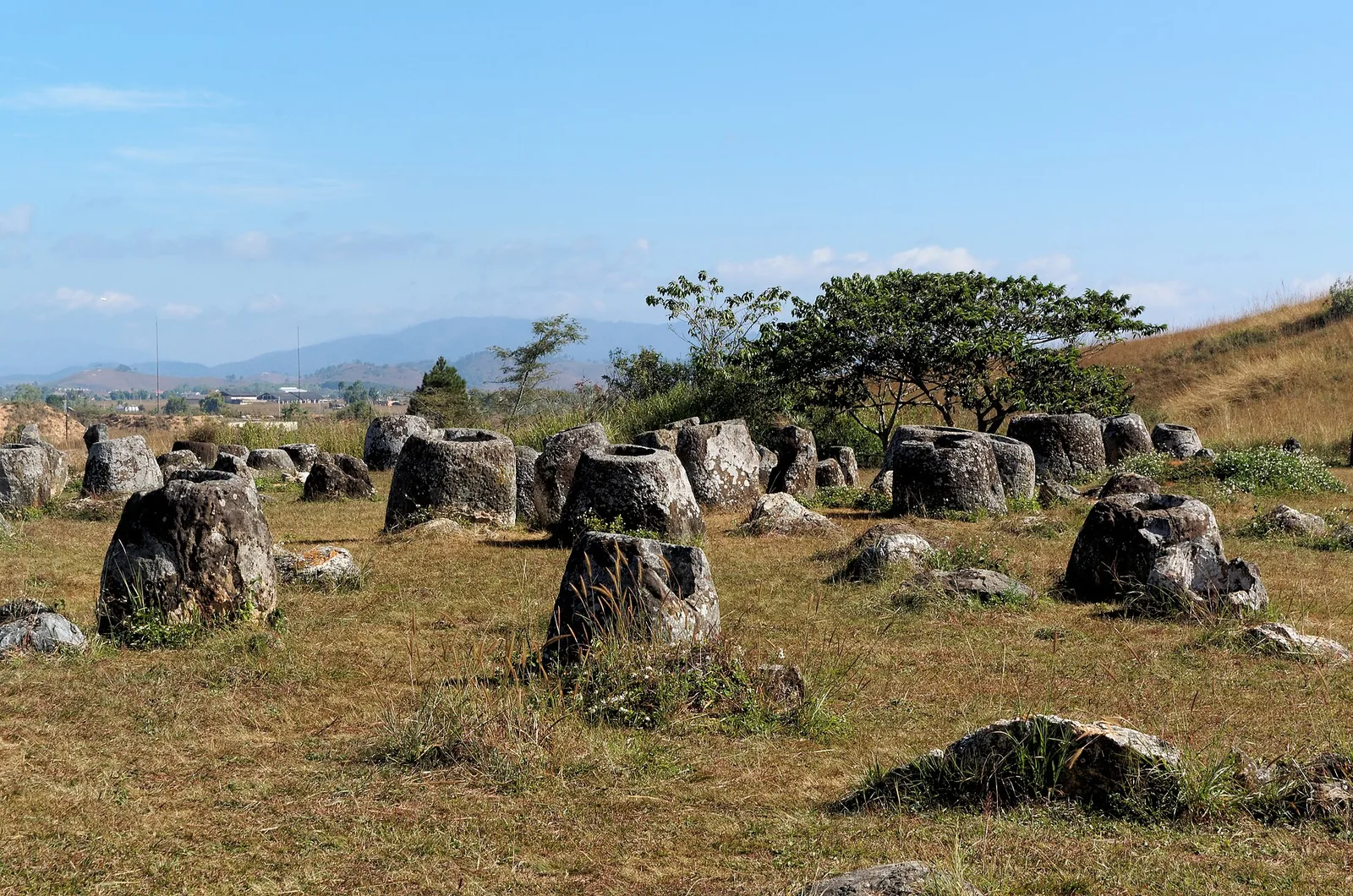
The Plain of Jars is one of Laos’s most distinctive archaeological landscapes. Thousands of large stone vessels are spread across upland valleys and hills in Xieng Khouang Province, with the best-known visitor sites reached from Phonsavan.
The jars are associated with Iron Age funerary practices, although many questions about their makers and exact use remain open. The landscape is now recognised as a UNESCO World Heritage Site.
A visit also confronts the more recent history of Xieng Khouang. Heavy wartime bombing left unexploded ordnance across the province, and museums and clearance organisations explain how that legacy continues to affect daily life.
How many days do you need?
Allow two full days in the area, plus arrival and departure time if travelling by road.
One day can cover the most accessible jar sites, but a second day gives time for a museum, Muang Khoun or a slower route through the countryside.
The main jar sites
Site 1
Site 1 is the largest and easiest introduction. It has a substantial concentration of jars, clear visitor infrastructure and broad views across the plateau.
It works well as the first stop because the scale and layout make the archaeology easier to understand before visiting smaller, more rural sites.
Sites 2 and 3
Sites 2 and 3 are farther from Phonsavan and are often combined on a day trip. Their hilltop and farmland settings make the journey as important as the individual jar groups.
A local driver or organised tour simplifies the connection and adds historical explanation. Road and trail conditions may vary with the season.
UXO safety is not optional
Unexploded ordnance remains a serious danger in Xieng Khouang Province. At archaeological sites and in the countryside, walk only on cleared, marked paths. Never follow an informal shortcut through grass or fields.
This is one destination where local guidance is especially valuable. The issue is not a dramatic travel story; it is a continuing reality for local communities.
Museums and historical context
Spend time at a museum or information centre in Phonsavan before or after the jar sites. Understanding the archaeology, the bombing history and current clearance work changes the way the landscape is read.
Muang Khoun, the former provincial capital, can also be included for temple ruins and evidence of the region’s recent history.
A practical two-day plan
Day 1: Begin with historical context in Phonsavan, then visit Site 1 with enough time to walk the marked circuit slowly.
Day 2: Join a driver or tour to Sites 2 and 3, potentially adding Muang Khoun if the route and daylight allow.
With a third day, keep the schedule flexible for local villages, a longer museum visit or weather delays.
Where to stay
Phonsavan is the practical base, with guesthouses and hotels near restaurants, tour agencies and transport connections. The town itself is spread out, so check the exact map location rather than relying only on a property name.
Choose a central stay if you plan to arrange a shared tour, and confirm whether breakfast or an early pickup can be organised.
Getting there and onward
Phonsavan is reached by road and, depending on current schedules, by domestic flight. Mountain road journeys can take longer than expected.
Do not connect directly from a long road arrival to a prepaid tour. A night in town first provides a buffer and time to compare options.
The Plain of Jars can fit between Vientiane and northern or central Laos, but it is not on the main Vientiane–Vang Vieng–Luang Prabang railway corridor. Read Getting Around Laos before fixing the sequence.
When to visit
The drier months generally make rural roads and walking routes easier. Mornings can be cool on the plateau, so carry a layer. Wet-season landscapes are green, but rain can slow road travel and make paths muddy.
Good to know
- Stay on marked, cleared paths at all times.
- Carry sun protection; jar sites are exposed.
- Hire a knowledgeable local guide for context, not only transport.
- Bring cash for smaller entrance fees and local stops.
- Avoid reducing the province’s history to war tourism.
- Leave extra time before onward buses or flights.