Bolaven Plateau
Plan the Bolaven Plateau from Pakse with waterfalls, coffee farms, Paksong, Tad Lo, scooter-loop advice, accommodation and a practical southern Laos route.
- Best for
- Waterfalls, coffee, road trips and cooler mountain landscapes
- Ideal stay
- 3–5 days from Pakse
- Last reviewed
- 2026-07-23
Why visit the Bolaven Plateau?
The Bolaven Plateau rises east of Pakse into cooler, wetter highlands known for coffee, waterfalls and road trips. It is one of the easiest ways to add rural landscapes to a southern Laos itinerary without travelling deep into a remote province.
Paksong is the centre of the coffee region, while Tad Fane and Tad Yuang are the best-known waterfalls near the main road. A longer loop reaches Tad Lo, villages, farms and quieter stretches of the plateau.
The region can be explored by scooter, car with driver or organised tour. The best choice depends on road experience, weather and how much time you have.
How many days do you need?
A day trip from Pakse can cover major waterfalls and a coffee stop, but it only samples the plateau.
Allow three days for a small loop and four or five days for a slower circuit with Tad Lo, village stops and unplanned detours.
Waterfalls worth prioritising
Tad Fane
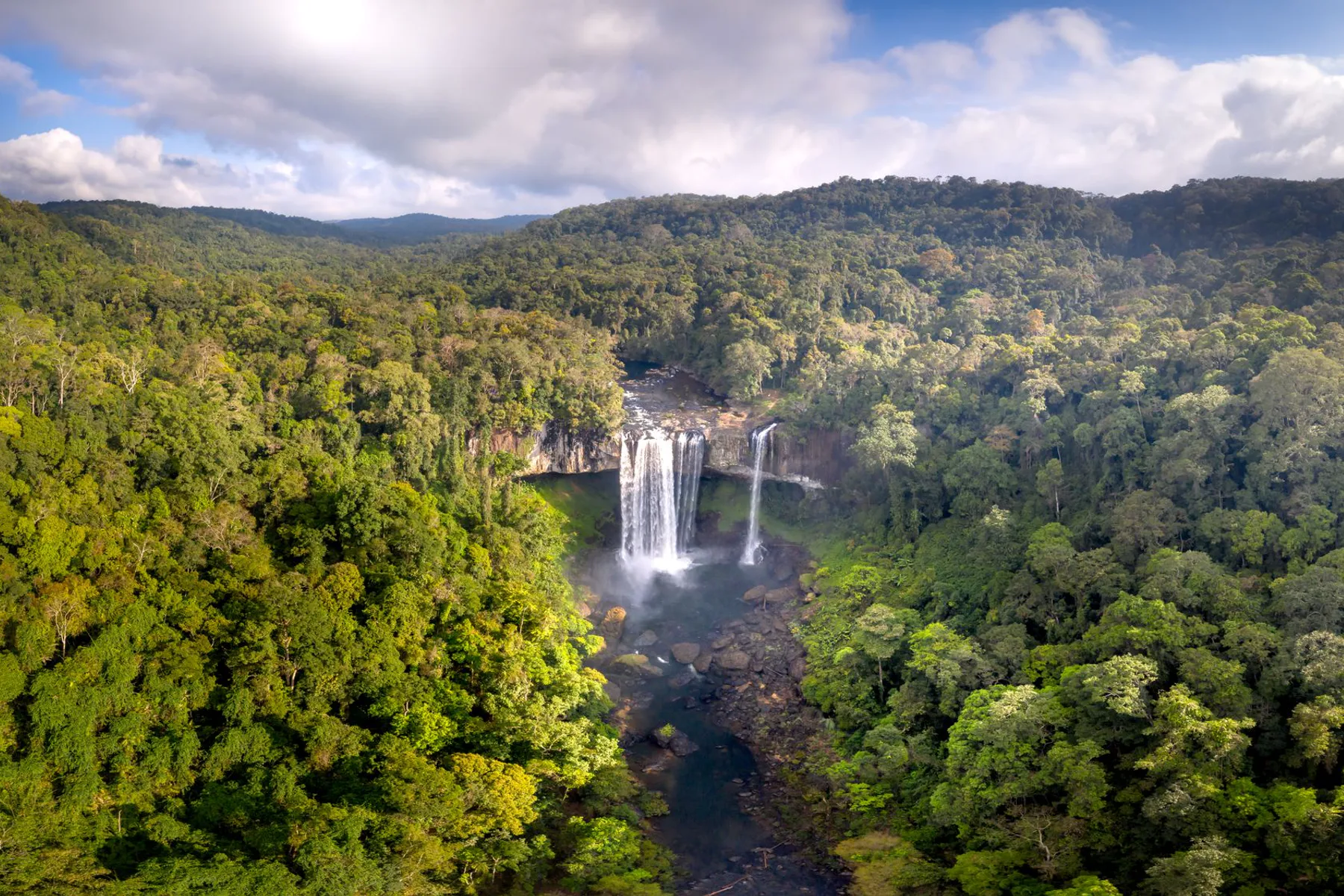
Tad Fane’s twin streams drop into a deep forested gorge and create the plateau’s most recognisable view. The main viewpoint is easy to combine with nearby stops along the road to Paksong.
Adventure activities may operate around the gorge. Check current conditions directly and follow the operator’s safety instructions.
Tad Yuang
Tad Yuang has developed viewpoints and paths that reveal the waterfall from several levels. Steps can be wet and slippery, particularly after rain.
Tad Lo and Tad Hang
Tad Lo is a useful overnight area on a longer loop, with guesthouses, river scenery and access to several falls. It offers a different rhythm from the busy roadside stops closer to Pakse.
Never assume a pool is safe because other people are swimming. Water levels and currents change quickly.
Coffee country around Paksong
The plateau’s altitude, volcanic soil and rainfall support much of Laos’s coffee production. Paksong and the surrounding roads have cafés, farms and small producers offering tastings or tours.
A meaningful visit goes beyond ordering a latte. Ask where the beans were grown, how they were processed and whether the visit includes time with farmers or only a retail stop.
Harvest-season experiences and tour schedules change, so contact farms directly before making them the centre of a fixed itinerary.
Small loop or large loop?
The small loop focuses on the main waterfall and coffee corridor and suits travellers with limited time.
The larger loop reaches farther into Salavan and Sekong landscapes, with longer riding days and simpler accommodation. It is better for experienced riders who value the road itself.
Map names vary between rental shops and travel blogs. Ask for a current route briefing in Pakse instead of following an old diagram without checking road conditions.
Scooter or driver?
A scooter offers independence but is appropriate only for licensed, insured and experienced riders. Rain, potholes, trucks, gravel and animals can all affect the road.
Before leaving Pakse, test the brakes, tyres and lights, photograph the vehicle and save the rental contact offline. Wear a proper helmet and finish each day before dark.
A driver is the better option for a one-day waterfall trip, families, non-riders or anyone travelling during unstable weather. It also allows everyone to look at the scenery.
A practical three-day route
Day 1: Leave Pakse for Tad Fane, Tad Yuang and coffee stops around Paksong. Stay on the plateau.
Day 2: Continue toward Tad Lo, allowing time for villages and secondary waterfalls.
Day 3: Return to Pakse on a route chosen according to current road conditions.
Add another night if you want a farm stay, a long trek or a larger loop.
Where to stay
Paksong has practical hotels and coffee-country stays. Tad Lo offers relaxed guesthouses near the river, while rural lodges and homestays can make the plateau itself part of the experience.
Check hot water, road access, food availability and whether the property can arrange onward transport.
Getting there
Pakse is the normal gateway. The first major waterfall and coffee stops are close enough for a day trip, but distances increase quickly on a full loop.
Combine this guide with the Pakse guide and leave luggage at a city hotel if travelling with only a small bag.
When to visit
The dry season generally offers simpler road conditions. The wet season brings powerful waterfalls and intensely green landscapes, but also heavier rain, slippery roads and reduced visibility.
The plateau is cooler than the Mekong lowlands. Carry a light layer for early starts and rain protection in any season.